Classroom Ready Front Of Class Design
Industry
Lesson Delivery
Role
UX Designer, UX Researcher
Team
PM, TDM, Commissioning Lead, Content Leads, Third-party Developers
Year
2024-2025
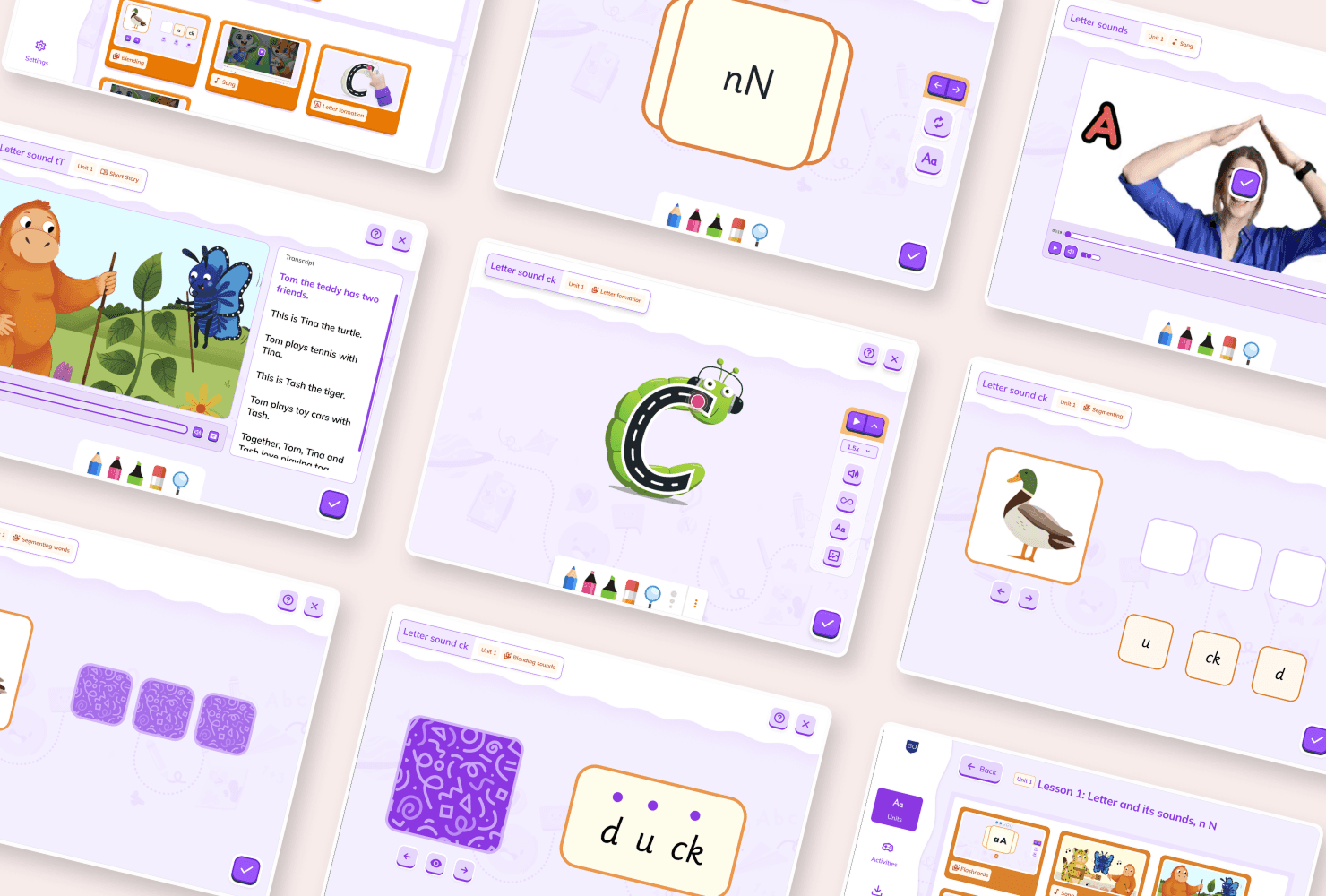
Challenge
Early years teachers use various methods to integrate digital content into their lessons but struggle to find, collate, and implement quality resources.
Existing solutions often require teachers to create their own materials and activities - not ideal for daily use. As lead UXD, I led discovery through solution design for a front-of-class tool that enables seamless lesson delivery and engaging learning experiences for little learners.
Solution
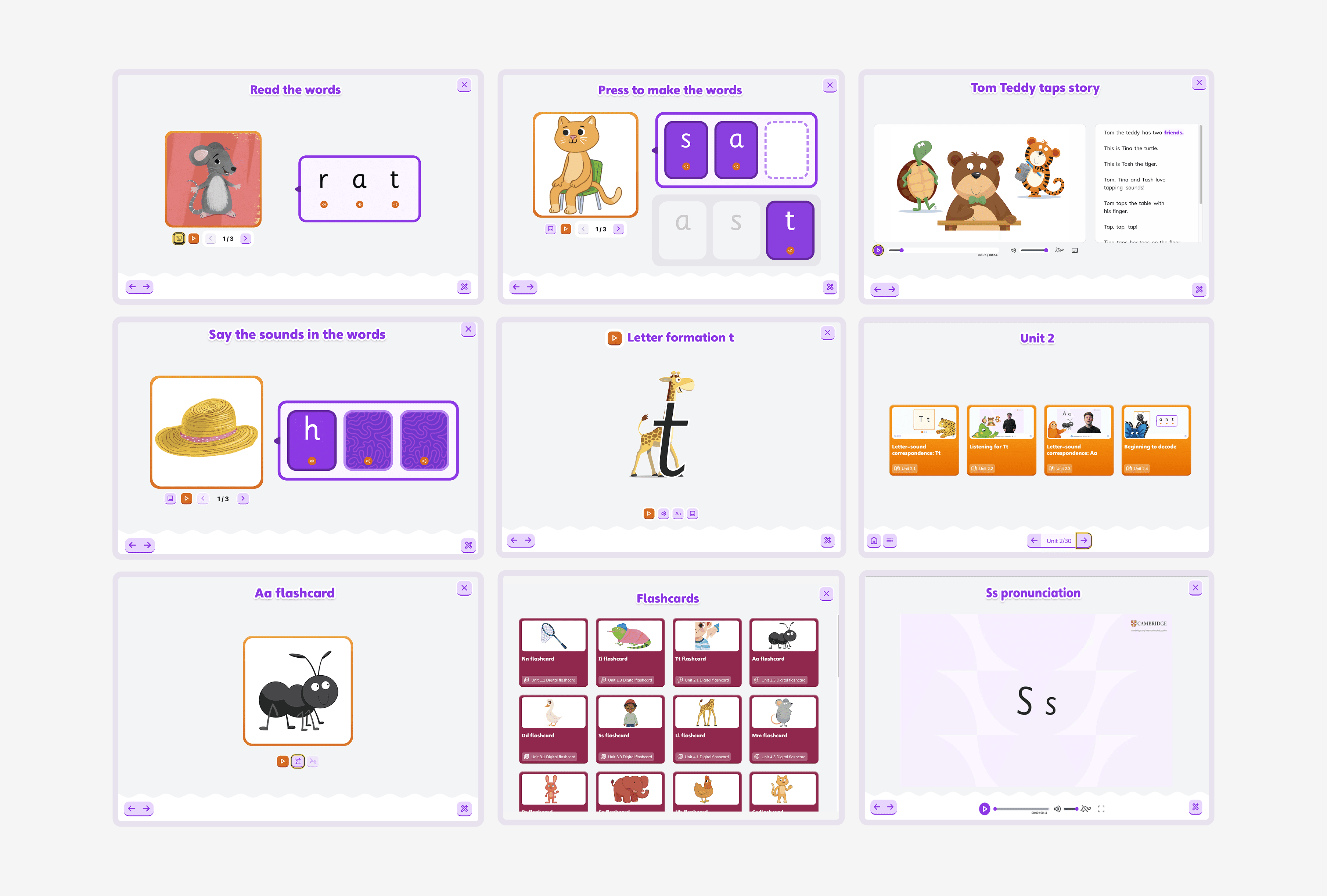
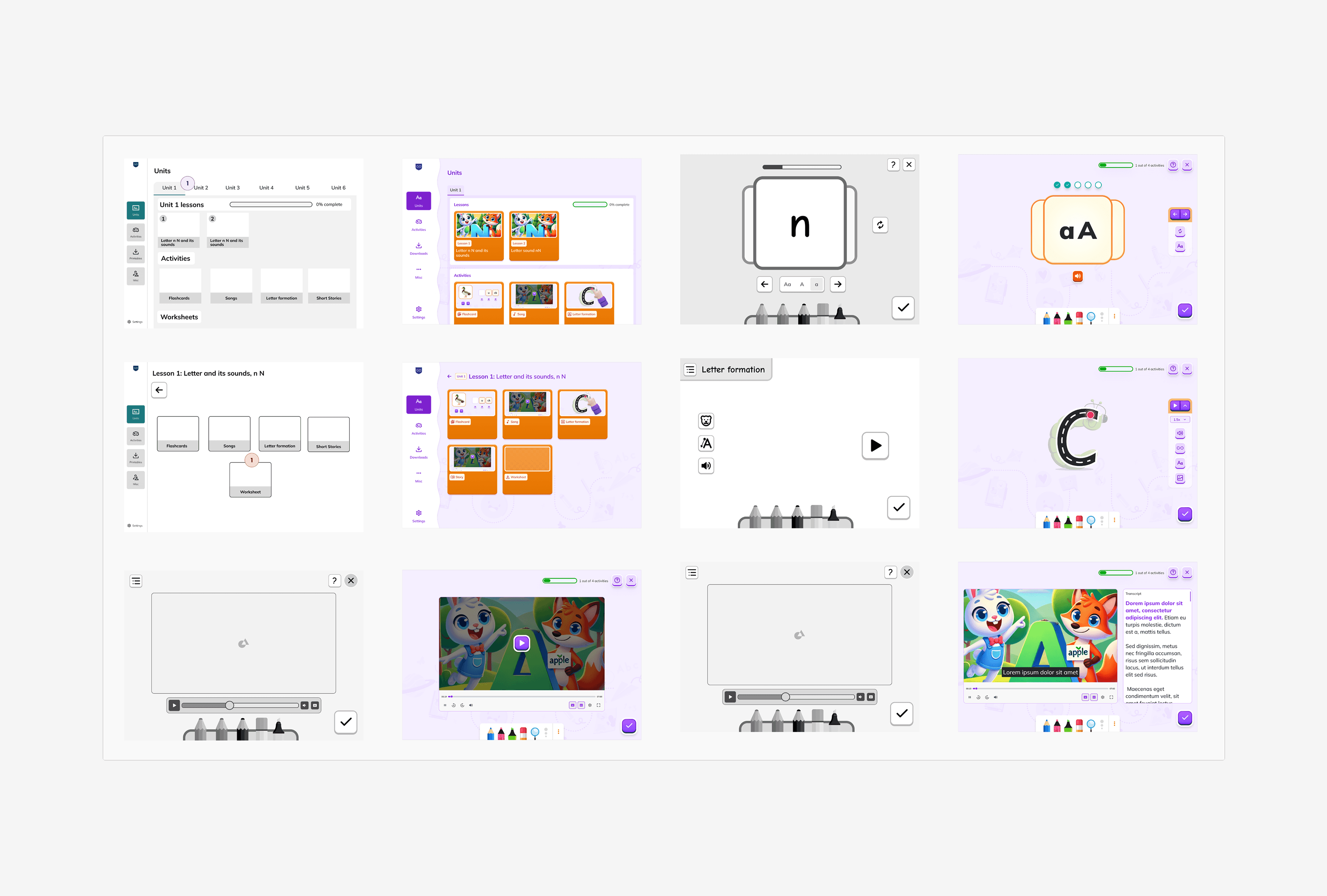
A digital front-of-class ecosystem with integrated components designed to deliver pedagogically-grounded, adaptive resources that eliminate dependencies on supplementary materials.
UI was designed to adhere to developmentally-appropriate design principles: optimised touch targets for large displays, motivational mechanics, error-tolerant interactions, and granular teacher controls to enable contextual customisation.
Impact
Teachers across global regions validated the solution through prototype testing. All expressed excitement and confidence that the application would improve learning outcomes while seamlessly integrating into their classrooms.
Teachers identified key differentiators over competitors: comprehensive, consistent, engaging and time-saving .
Cross-functional synthesis
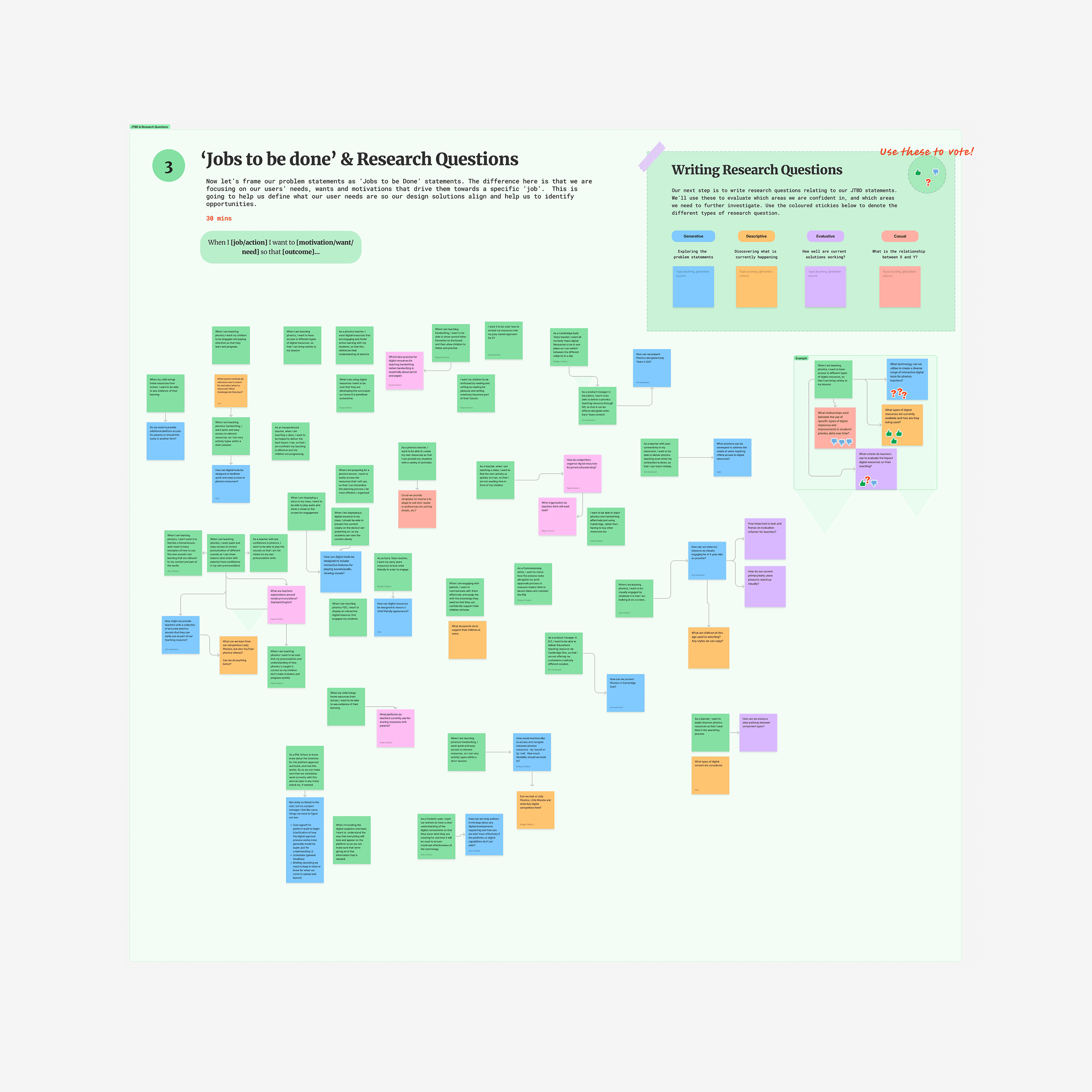
I worked collaborated with SMEs to dig into the needs of Early Years teachers. I facilitated workshops to turn existing research insights into clear jobs-to-be-done statements and sorted them by what we knew vs what we still needed to validate.
Outcome → We need understand how we can provide seamless access to resources and how to facilitate an engaging front of class teaching and learning experience
From pedagogy to ideation
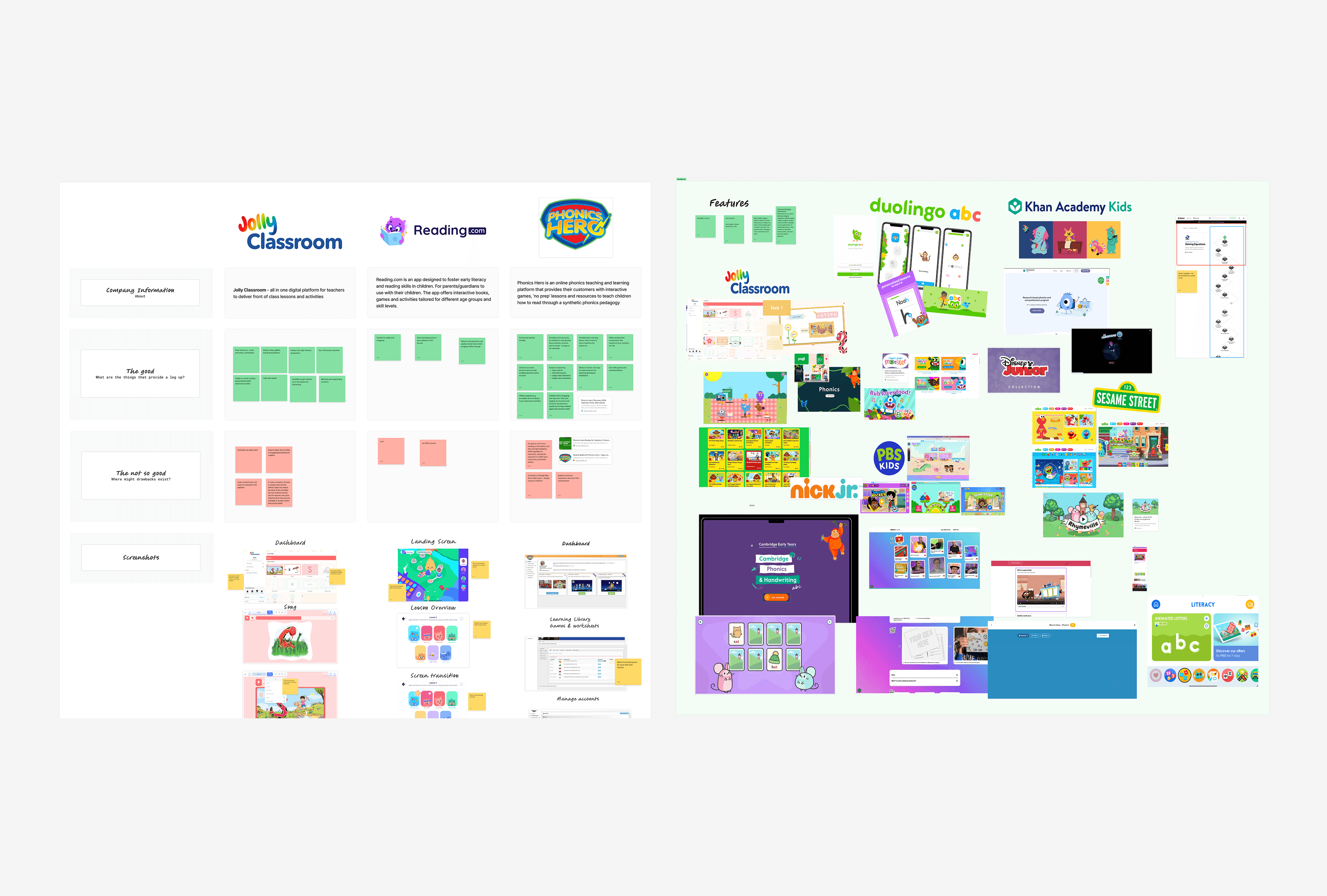
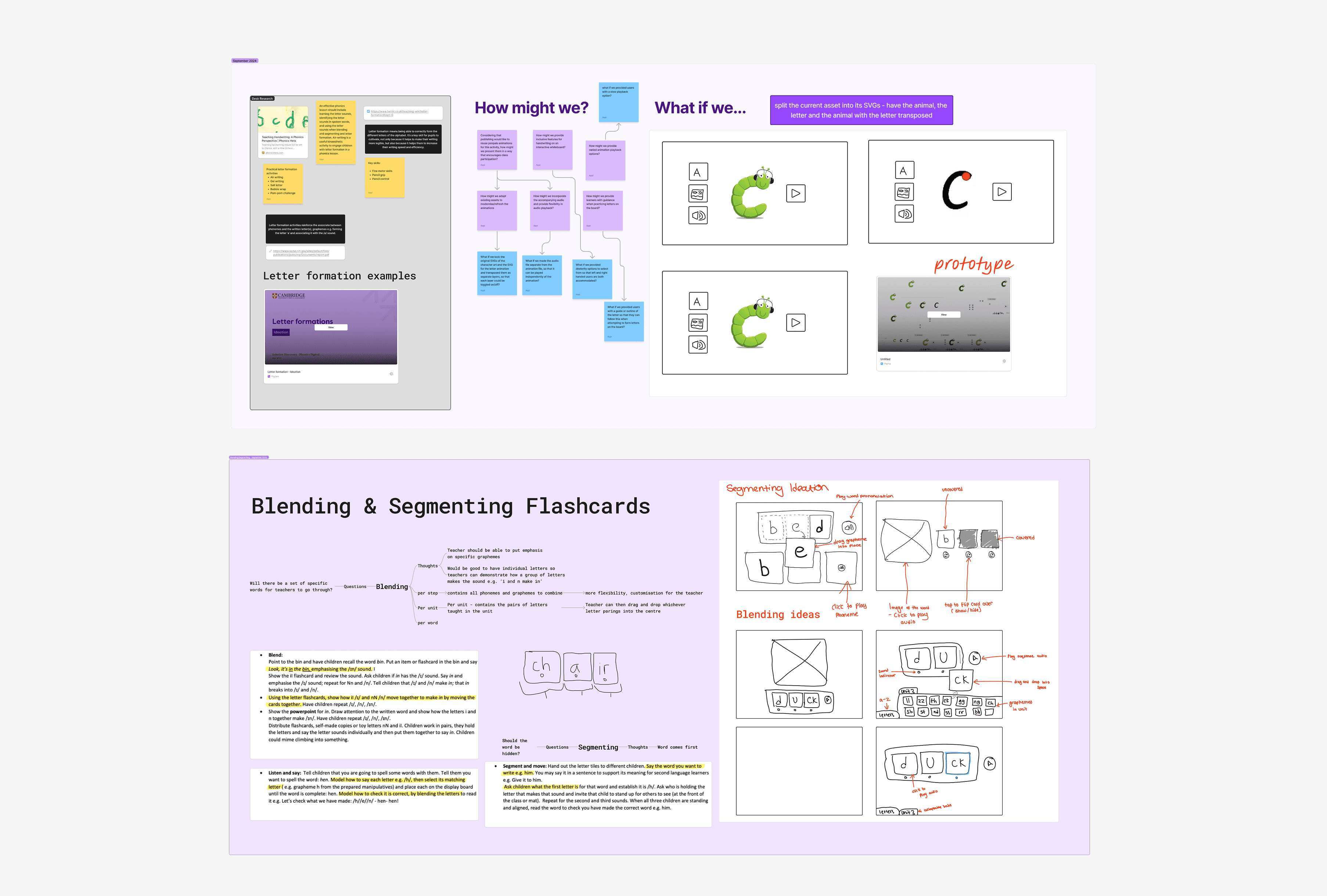
I started with desk research into phonics pedagogy to understand what effective learning looks like. This directly shaped how I designed the UX around the various learning activities. I also conduced competitor teardowns to identify effective front-of-class UX patterns: clear lesson structures, audio/visual controls, progress tracking, and interactive engagement mechanisms.
I ran ideation workshops to translate this insight into design concepts, with one key finding driving ideation: play and variety keep young learners engaged. Kids respond to gamification, animations, characters, and active participation.
Validating with teachers
Using ProtoPie, I built a hi-fi prototype and tested it with teachers across four global regions. Teachers loved that it was a "one-stop hub" application consolidating all they need - saving time and reducing admin.
The key insight: Digital is just one element of Early Years teaching. Screen time must add real value and fit with hands-on play.

Lessons learnt
Building effective education tools requires an understanding of pedagogy, teacher workflows, and real classroom constraints. Research as well as cross-team collaboration with content experts was essential.
Early validation revealed what previous research couldn't. Teachers need digital solutions that balance screen time with hands-on learning, provide clear guidance, and deliver real engagement.