Investigating AI for Lesson Planning: Mixed-Methods Research
Industry
AI, Lesson Planning
Role
UX Researcher
Team
Data Scientists, Devevlopers
Year
2025
Challenge
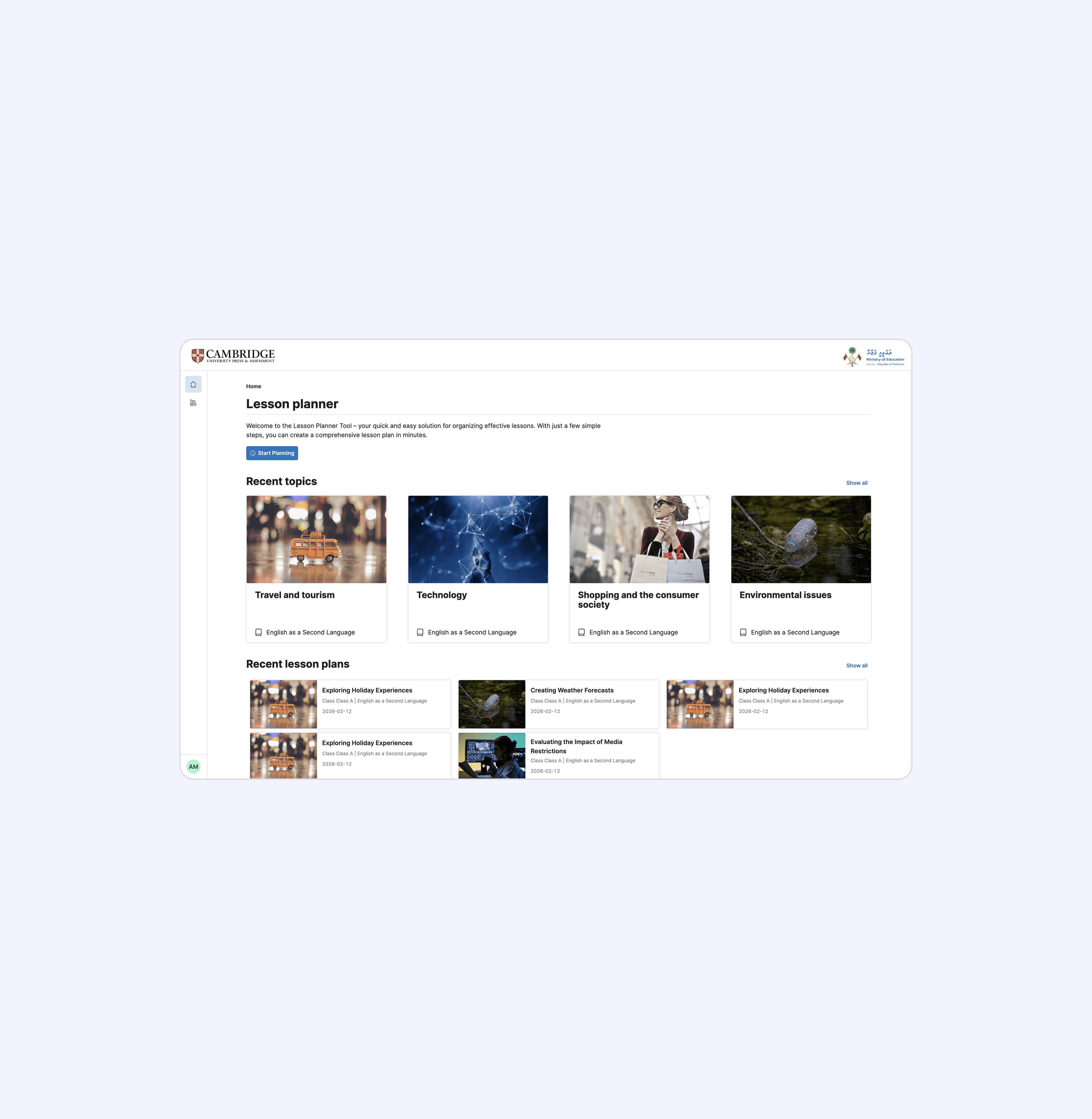
The EdTech landscape is rapidly evolving with AI at the forefront. However, our team had no real understanding of how teachers were using AI or what value it brings to them. A survey conducted by our insights team showed that 60% of teachers were using AI but this metric doesn't reveal how or if AI is truly helping teachers.
What problems are teachers actually trying to solve with AI? How well are those solutions working, and what could we do to make a our AI product different? Acting as UX researcher, I designed a comprehensive research program to move us beyond surface data to a deeper qual and quant understanding of AI's role in teaching practice.
Mixed Method Approach
I collaborated with the Data Analytics & AI team, who built a live lesson planning prototype, and the Maldives Ministry of Education, who wanted to test AI tools with teachers. Over four months, I designed and executed a three-phase research program with IGCSE ESL teachers:
longitudinal pilot evaluation with 41 teachers,
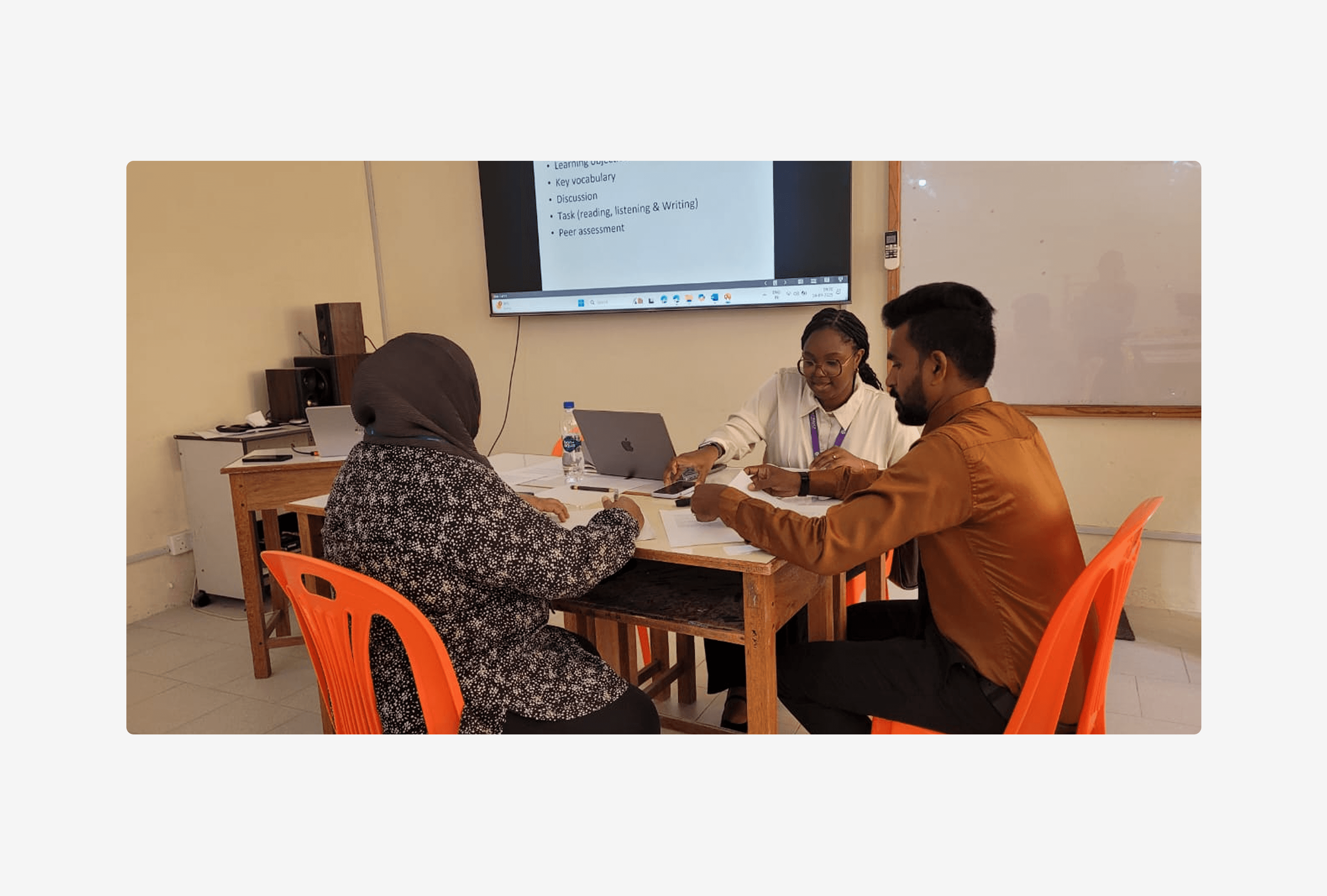
immersive field research across 8 schools and 5 islands in the Maldives
and strategic synthesis translating insights into digital product opportunities.
Overall Findings
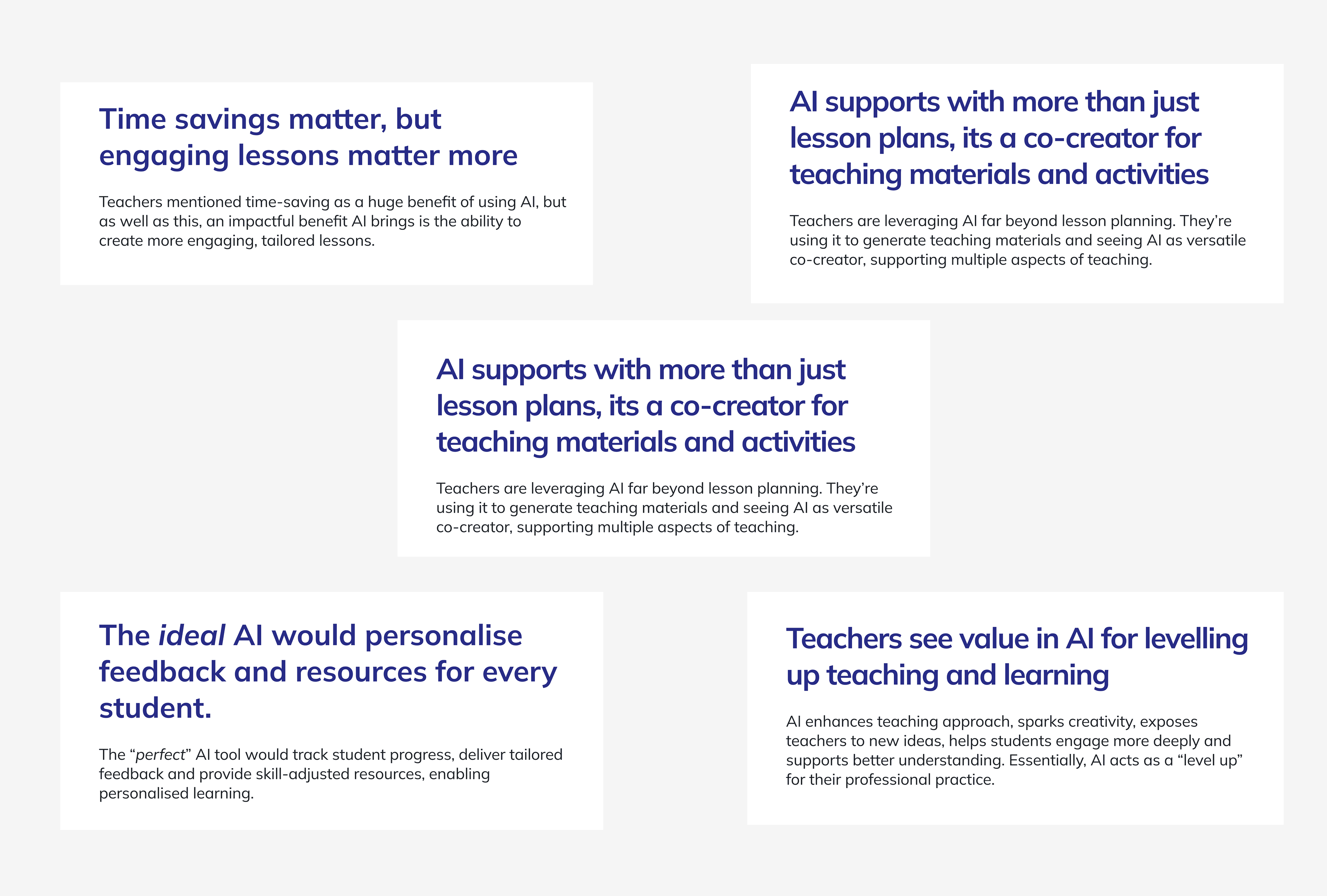
Teachers valued creative enablement over efficiency, seeing AI as a collaborative partner, not just a time-saving tool. This encompasses 5 main opportunity areas:
Trust through syllabus alignment - Teachers trust AI outputs with pedagogical grounding more than generic outputs
Creative partnership - AI supports ideation, rather than replacing teachers' decision-making
Holistic ecosystem integration - Teachers want tools that connecting planning, assessment and reporting
In-platform flexibility - Being able to seamlessly adapt AI outputs on the fly is a necessity
Pedagogical scaffolding - Teachers are learning new teaching ideas and approaches with AI.
These insights directly led to the business decision to greenlight an AI lesson planning MVP for summer 2026, which I am actively working on.
AI Lesson Planner Pilot Insights
The pilot ran for three months with 41 teachers. Data was gathered via, four survey waves, in-platform feedback, and analytics tracking.
Average satisfaction sat at 5/10 indicating a split between highly satisfied and frustrated teachers. Teachers appreciated time savings and differentiation ideas in the generated outputs but some flagged reliability, lack of cultural relevance and lacking curriculum alignment as pain points.
Nearly all teachers modified outputs, adjusting timing, pacing, and context. This indicated that adoption barriers may be around trust, pedagogical fit, and contextual understanding.
Trip Insights
I spent a week in the Maldives visiting 8 schools across 5 islands, using interviews, focus groups, and observations to understand how teachers work with AI.
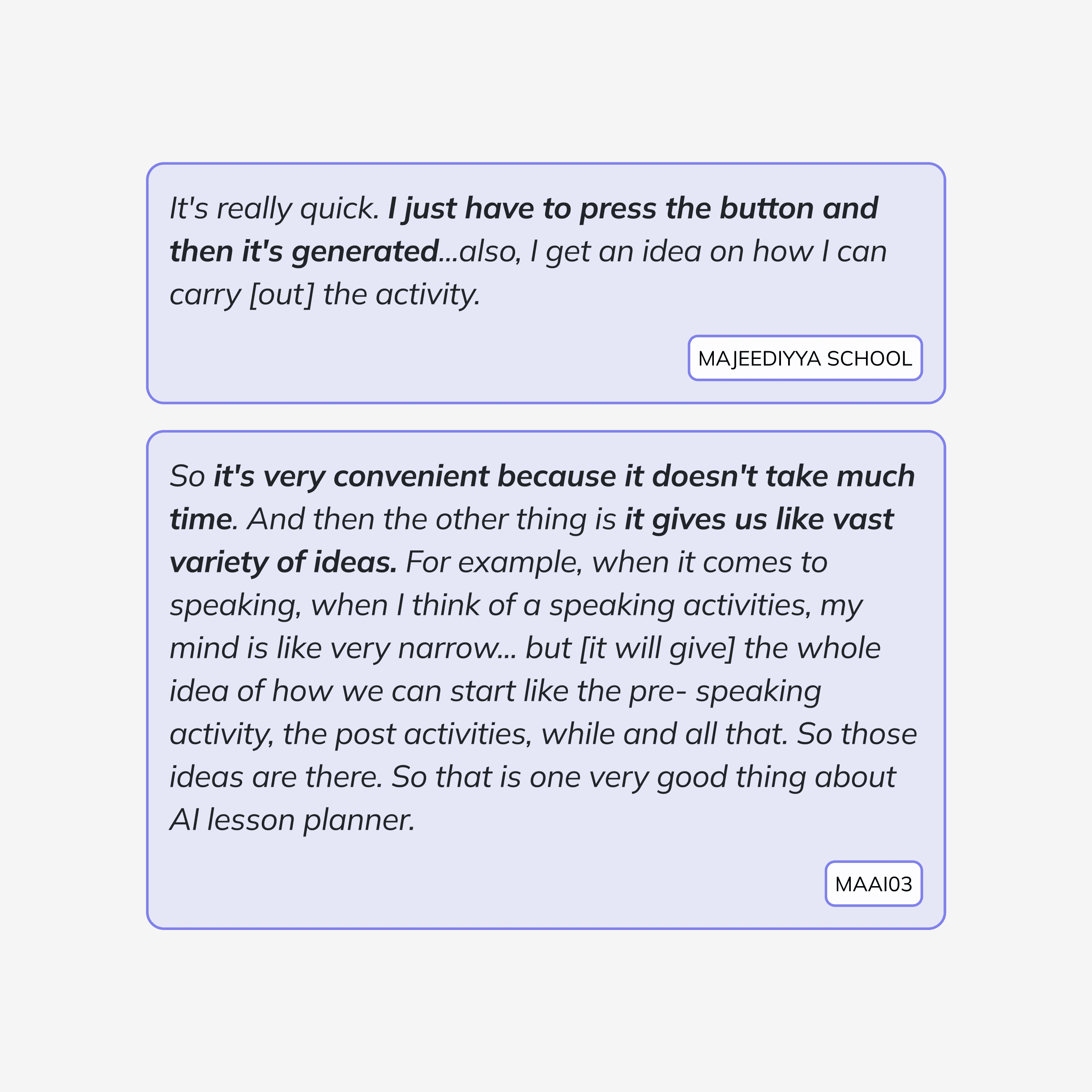
I found that teachers value AI because it helps them to think differently. It sparks creative ideas and is able to adapt resources and lessons to their context. Most used AI for creating materials creation, differentiation, lesson activities, marking and feedback.
Key to this is that even though AI outputs often need refinement and sense checking, teachers continue to use AI for lesson planning, creating or adapting content because the resources they needed don't exist or aren't accessible.
Key Opportunity Areas
Thematic analysis revealed what good teacher AI product design should include:
Visible and verifiable curriculum identifiers to build trust
Real-time editing capabilities are essential for teachers to ensure their content is classroom ready.
Ideally, teachers don't want standalone tools. They want a tools that integrate with each other, enabling smart connection between student needs and subsequent needs for planning, assessment, and reporting.
Interestingly, teachers valued AI's potential to introduce them new pedagogical approaches.
Impact on AI product strategy
This research provided essential validation of understanding of what teachers need from AI tools; identifying decision patterns, constraints, and specific and contextual user needs. The outcomes of this work secured investment from the business following the clear opportunity areas for digital product development.
This project has now shifted from exploration to execution and I'm now leading design for the AI lesson planning tool currently in development.